
 11TH ANNIVERSARY

This guide shows how to use lace and light layers to make deep V-necklines look intentional, flattering, and secure without feeling overexposed.
You can keep your deep V-neck romantic and a little risky while still controlling cleavage, preventing gaping, and staying comfortable all night.
You know that moment when you bend over in a deep V and feel one sneeze away from a wardrobe malfunction? Or when you add a thick cami underneath and go from siren to suffocated in five seconds? The right lace inserts, modesty panels, and plunge bras reliably turn “too low” into “just right.” Here is how to use lace and light layers so your deep V looks intentional, secure, and fully under your control.
Why Deep V-Necks and Lace Are a Power Couple
Deep V-necks are not new; fashionable women in the 1840s already wore plunging daytime necklines softened with removable white collars and wide lace panels that framed the chest and added coverage where needed. You are joining a long line of people using pretty trim to manage cleavage. Historical gowns often combined a low V with a lace “bertha” panel that sat over the bust and shoulders, showing that you can reveal skin and still keep things elegant. You can see that same balance of deep cuts and lace coverage in nineteenth-century examples on the Fashion History Timeline’s overview of 1840s dress. Deep V-neck day dresses with lace collars and lace berthas show exactly this trick in action.
Modern lace V-neck tops, corset-style lace pieces, and lace-trim camis work the same way. The V shape lengthens your torso and creates a vertical line that many body types find flattering, while the lace edge gives a softer, more romantic finish than bare skin plus straight fabric. Lace brings texture and visual interest, so the eye reads your outfit as styled, not “oops.”
Start With the Top: Fabric, Fit, and Intent
Before you add a single layer, decide what you want the neckline to do. Is this a sultry date-night deep V that can show some cleavage, or a “meet-the-parents” deep V that should only hint at it? Your comfort level is the dress code here; you are not required to bare anything you do not feel like sharing.
Fabric matters more than most people think. A V-neck in a soft 95% rayon, 5% spandex blend drapes over curves, feels cool, and stretches enough to move with you but springs back instead of sagging by the end of the night. Rayon has a smooth, breathable hand, while a small amount of spandex gives tops comfortable four-way stretch and helps them resist bagging after wear and washing, which is why rayon-spandex V-neck tees and blouses are popular in everyday, work, and even active styles. Rayon-spandex blend tops are often recommended as versatile wardrobe basics for this mix of comfort, durability, and easy care.
Fit is non-negotiable. If the shoulders are sliding, the whole V shifts lower when you move. Many people with shorter upper torsos or fuller busts find that shortening the shoulder seams or taking in the bodice a touch stops the neckline from drooping. A tailor can usually tweak those seams quickly, and that small change often makes more difference than any extra layer. If you keep yanking your V up, the problem is cut and fit, not your body.
Lace Layers That Look Like Design, Not Panic
The goal with lace is to make coverage look deliberate, not like a last-second “oh no” fix. Think of lace as a built-in accessory.
Sewn-In Lace Inserts to Raise the V
If a deep V is just a bit too low, a lace insert sewn into the neckline is a sleek fix. Sewists often place a narrow strip of lace just inside the neckline edge, follow the V along both sides, and then close the lace at the front with tiny snaps so it crosses higher on the chest. Because lace is decorative by nature, the added coverage reads as a design feature instead of “I tried to patch this.”
This works beautifully on wrap dresses that gape, button-front dresses that stretched out over time, or any top where the V now hits lower than you like. Choose lace that matches the vibe of the garment: something soft and floral on a romantic dress, or clean geometric lace on a modern top. When the lace color echoes the main fabric, most people will assume the garment came that way.
The benefits are significant: no extra bulk from a full cami, no shifting layers, and coverage that stays put even when you dance or bend over. The tradeoff is that it takes a bit of sewing, and once the insert is in, you cannot switch to a very daring plunge without some unpicking.

Removable Lace Modesty Panels
When you want options, a removable lace modesty panel is your best friend. Think of it as a soft triangle that snaps inside the V, lifting the neckline visually without adding a whole extra top. One popular DIY approach is to cut a folded knit triangle, often with lace as the visible layer, and hand-stitch or snap it to the inside of the neckline points and just below the V. You measure how high you want the coverage from the bottom point of the V, and how wide the neckline is at that height, then add a bit of extra width so the panel overlaps and lies flat.
For hot climates or anyone who runs warm, this solves the “I want coverage but I refuse to wear three layers” problem. You still get airflow around your torso, unlike stacking camisoles, and if you use snaps instead of permanent stitching at the top corners, you can open the panel for nursing or remove it entirely when you want the full plunge back. Matching the panel fabric to the top makes it almost invisible; choosing lace or a contrast color turns it into an intentional peek of texture.
The downside is that a poorly anchored panel can twist when you move. Make sure it is anchored at several points and fitted closely to your shape, not just hanging like a curtain across your chest.
Let the Lace Peek Out on Purpose
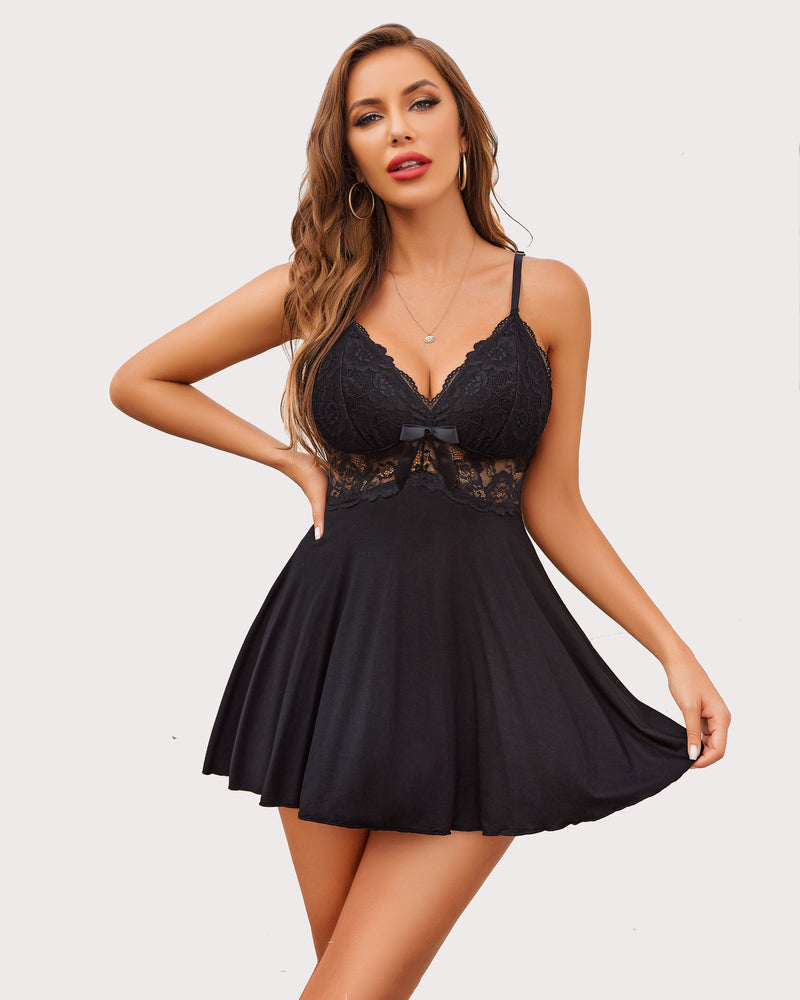
Sometimes the easiest move is to embrace the lace layer as an accessory. A lace-trim camisole, lace bralette, or lace corset-style top under a plainer deep V turns “too much cleavage” into a soft panel of pattern. Here, the lace edge is allowed to show by design, framing the V instead of hiding it.
Lace itself behaves differently than regular woven fabric. Many lace fabrics barely fray when cut, which means finishing a lace edge is mainly about achieving a clean design line, not stopping unraveling; Lace hemming tutorials note that most laces do. That is why you see lace camis and bralettes with beautifully scalloped edges that sit right against the skin without bulky turned hems.
If you are layering a lace-trim cami under a V-neck sweater or tee, let just a whisper of the scalloped edge peek out. Choose a color that either blends with your skin for a subtle effect or contrasts with the main garment when you want more drama. This trick is especially good if you love the deep V shape but want coverage when you sit, bend, or hug people.
Here is a quick comparison to help you choose your favorite approach:
Layering trick |
Coverage feel |
Heat and bulk |
Best for |
Potential downside |
Sewn-in lace insert |
Permanent extra coverage, subtle |
No extra torso layer |
Everyday tops and dresses you wear often |
Requires sewing to remove or adjust |
Removable lace panel |
Adjustable coverage from high to low |
Very low bulk, cooler than a cami |
Hot weather, nursing, multi-use pieces |
Can shift if not snapped or fitted well |
Lace cami or bralette |
Coverage plus visible lace detail |
More coverage and warmth |
Sheer or very deep Vs, cooler seasons |
Adds an extra layer under snug clothes |
What to Wear Underneath: Bras That Work With Deep V + Lace
If the bra underneath is fighting your neckline, nothing on top will sit right. The key with deep V-necks is matching the shape of your bra to the plunge of your garment.
Plunge and deep-plunge bras have low, narrow center gores that sit down between the breasts instead of up on top of them. When the bra’s neckline mimics the V of your top, the fabric can dip between your breasts without flashing the bra bridge. Many front-closure bras also have a tiny, low center panel, which makes them surprisingly great under wrap dresses and low-front rompers. Push-up plunges combine this shape with padding to fill out the neckline and keep the fabric from collapsing into the center, which can turn an “oops, my top swallowed my chest” moment into a smooth, controlled curve of cleavage.
If you like cleavage but not chaos, this combination is powerful: a plunge bra that matches your skin tone or your top plus a bit of fashion tape along the V edges to keep fabric anchored to your bra or skin. This is especially helpful on stiff or slippery fabrics that try to gape or slide when you move. People with fuller busts often find that going braless under deep Vs leads to constant adjusting and a higher risk of accidental exposure, especially while dancing; a supportive plunge plus tape lets you relax.
For more modest days, look for camisole bras or bralettes with a higher lace panel across the top of the cups. The lace can peek through the V as a decorative edge while the bra underneath does the heavy lifting. That way, if your V shifts, all anyone sees is more lace.
Choosing Your Ideal V Depth Without Feeling Overexposed
Deep Vs can be incredibly flattering. The vertical line draws the eye up and down, which helps petites look taller and gives curvier or broad-shouldered bodies a lengthened, balanced silhouette. Brides and stylists often lean on V-neck and plunging necklines to highlight the waist and elongate the torso, especially for hourglass or petite figures, because that shape focuses attention down the center rather than straight across the bust.
But context matters. A plunging lace V that is perfect for date night might feel out of place for daycare pickup or a conservative office. Instead of labeling the neckline “too much,” match the depth to the setting. For evenings out or weddings, a dramatically low V with a sheer lace insert can feel confident and glamorous. For work, you might shift to a mid-depth V with a lace modesty panel or cami that pulls the visible neckline up to just above the bust point while still showing some collarbone and neck, so you keep the lengthening effect without the extra drama.
If you are nervous about a new neckline, test it at home. Put on the top with your chosen lace layer and bra, then go through real-life motions: reach up to a high shelf, sit, stand, squat to pick something up, hug an imaginary friend. If you feel secure in all those positions, you are good.

If you are catching your breath every time you move, add a bit more lace or go one step higher in coverage until your body relaxes.
Fabric Labels, Comfort, and Sustainability Extras
When you shop for deep V and lace pieces, the tiny tag is actually your friend. In the United States, Textile labels must list generic fiber content, percentages, the country where the item was made, and the identity of the manufacturer or responsible company, which makes it easier to compare how different tops will feel, drape, and wear.
Knowing that, you can choose fabrics that work with your skin and your lifestyle. Rayon-spandex blends tend to be soft, cool, and stretchy, which is great if you want your deep V to glide over curves. Cotton blends can feel more breathable but sometimes less drapey, which might make a very low V sit a bit stiffer. If you sweat easily, avoid thick polyester linings stacked under lace; a lace panel alone over your skin or over a thin, breathable lining will feel cooler.
If sustainability matters to you, it is worth paying attention to certification notes on product pages. Some lace V-neck tops are labeled with Global Recycled Standard (GRS) information and called out as part of Amazon’s Climate Pledge Friendly program when they contain at least half recycled fibers and meet strict social and environmental criteria along the supply chain. That means the lace and base fabric likely include verified recycled content and come from facilities that meet worker protection and chemical management standards, not just “greenwashed” marketing language. GRS-certified lace V-neck tops in Climate Pledge Friendly listings highlight this combination of recycled content, worker protections, and chemical controls as core sustainability pillars.
A sustainable, comfortable fabric plus a thoughtful lace layer is the sweet spot: your neckline feels good, looks good, and does a bit less damage on the way to your closet.
FAQ: Quick Answers for Common Deep V Nerves
What if I am full-busted and worried everything will look “too much”?
A deep V can actually be more flattering on a fuller bust than a high crewneck, which sometimes makes the chest look larger and blocky. Focus on a well-fitted plunge bra that brings your breasts toward the center without pushing them sky-high, plus either a narrow lace insert or a lace camisole bra that fills in the lowest two or three inches of the V. This creates one clean vertical line instead of a wide exposed area, which reads as an intentional neckline, not accidental overflow.
Can I make a low V more modest without sewing?
Yes. Clip-in or snap-in lace panels are widely available, and you can also fake it with a lace bralette or camisole bra. The trick is choosing a piece with a high enough lace edge to cover the amount of cleavage you want hidden, but not so high that it completely erases the V shape. Try different combinations at home until you find one that lets you lean, twist, and hug people without thinking about your neckline.
Deep V-necks are not the enemy; badly behaved necklines are. Use lace edges, smart layers, and bras that actually match your tops, and your V can be as daring or as demure as you want while you stay secure, chic, and absolutely in charge of the view.


 Secure Checkout


