
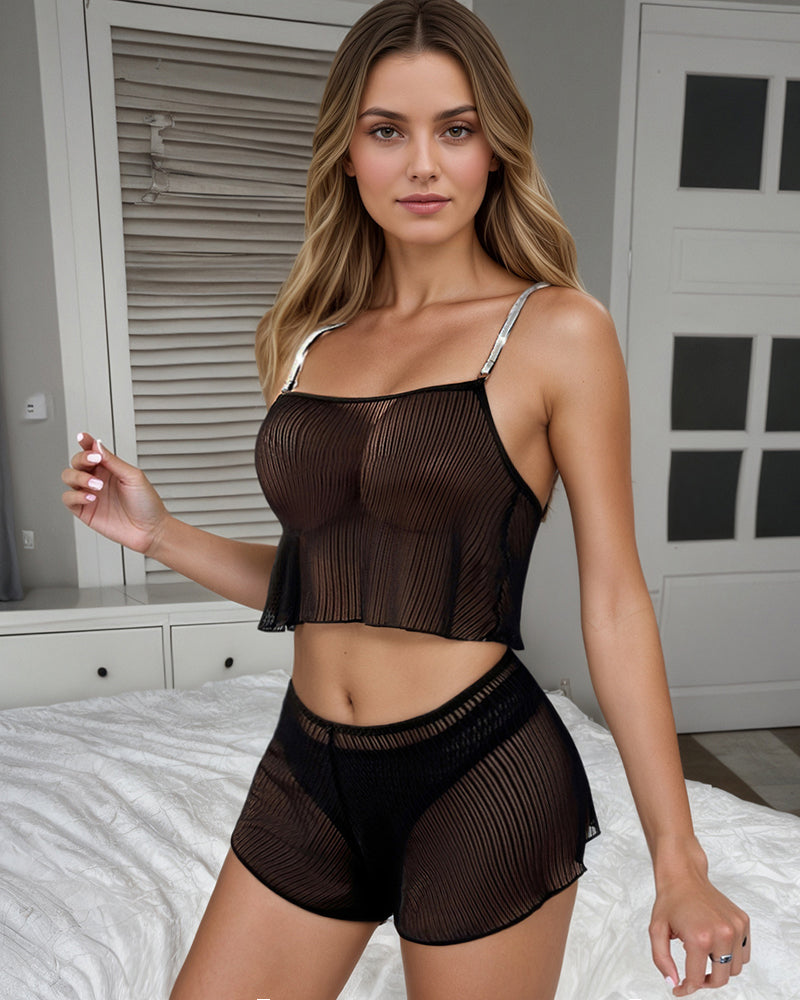



Bra-fitting communities are full of contradictions: a tight-feeling band still rides up, cups gape while tissue escapes at the sides, or loosened straps still dig in. Many also ask whether underwire automatically makes a bra more supportive. So, the most visible symptom may not identify its cause.
No single bra part creates support by itself. The band provides the base, cups shape and contain, seams direct tension, wings stabilize the sides, straps fine-tune position, and fabric must recover after stretching. Wire can add a defined frame, but a wire label alone cannot tell you whether the whole bra will fit or feel supportive.
So, this blog serves as a construction dictionary to compare bras by stated and visible details rather than offer promises attached to one feature.
How Does a Bra Create Support as a System?
Bra support comes from tension distributed across connected parts:
- The band wraps the torso
- The cups hold tissue
- The seams and panels control stretch
- The wings connect the front to the closure
- The straps maintain upper-cup position.
Fabric affects every section in motion. That is why two bras in the same labeled size can behave differently even when both are wired or both are wireless.
| Part | Primary job | What the label cannot tell you |
|---|---|---|
| Band | Anchors the bra around the torso | Firmness, recovery, or whether it stays level on you |
| Cups | Contain and shape tissue | Depth, projection, coverage, or shape compatibility |
| Seams/panels | Build shape and direct tension | How they will sit under clothing or on your body |
| Wings | Connect and stabilize the sides | Height, stiffness, or underarm clearance |
| Straps | Fine-tune upper-cup position | Placement, adjustment range, or slippage |
| Fabric | Provides stretch, resistance, and recovery | Performance from fiber names alone |
For a focused comparison of frames, read our guide to underwire, soft-wire, and wireless bra support. Here, the question is how every part cooperates.

Why Is the Band the Starting Point?
The band circles the ribcage and creates the base against which the cups, wings, and straps work. If it shifts, the rest of the bra loses a stable starting point.
You can look at the band from the front, side, and back. It should remain at a reasonable level as you breathe and move. Secure does not mean painful: it should not pinch sharply or make breathing difficult. For a hook-and-eye style, you should also check the product's guidance on which setting to use when new.
A band may feel tight because the band is small or firm, but cups that are too small or shallow can also pull the front away from the body and increase tension. If the back climbs upward, shortening the straps may worsen it. Our article on why a bra rides up and how to troubleshoot it examines that symptom in detail.
Product example: The Full Coverage Sheer Mesh Lace Bra has a wide underband, underwire, adjustable straps, a hook-and-eye closure, and double-layer mesh and lace.
How Do Cups and Seams Shape the Bust?
Cups surround breast tissue and organize volume. Cup size describes volume only within a particular sizing system and band size, but it does not describe cup shape.
A molded cup is formed into a set shape, while a cut-and-sewn cup is assembled from panels. Neither is automatically more supportive. The result depends on pattern, fabric, lining, size, and fit.
Seams are structural routes:
- A vertical seam often builds depth from the lower cup.
- A horizontal or diagonal seam can divide upper and lower sections and redirect tension.
- A multi-part cup may combine them.
These terms explain construction, not a guaranteed silhouette.
This is why gaping does not always mean "too big". Space near the edge can appear when a cup is too tall, shallow, rigid, or simply the wrong shape. Cutting in may signal insufficient room, but the edge may also be less flexible than the cup body. So, you need to check the lower cup, sides, center, neckline, and strap junction, not only the most obvious gap.
Product example: The Sheer Mesh Unlined Underwire Bra features cups, two mesh layers, two-ply mesh wings with a ballet back, adjustable straps, and hook-and-eye closures. It is a useful example of several anatomy terms working in one design.
Note: Treat names such as "full coverage", "demi", "plunge", "molded", and "unlined" as comparison clues, not exact measurements unless the product page supplies them.

What Do Wings and Side Panels Stabilize?
Wings are the side and back sections extending from the cups toward the closure. They continue the band around the torso and help resist sideways movement. A side-support panel is a separate piece inside or beside the cup, but it is not simply another name for a tall wing.
Wing height changes contact under the arm and across the back. A taller wing may provide more coverage but may sit too high for a shorter torso. A lower wing provides different coverage and clearance.
It is worth mentioning that when browsing plus-size lingerie, do not assume a larger size automatically has wider wings, reinforced panels, or broader straps.
Note: Photos suggest the outline, and listed measurements and try-on determine where it sits on you, so please confirm each feature on the individual page.
What Can and Can't Straps Adjust?
Straps connect the upper cups to the back and help hold the top edge in position. They refine fit, but they do not rescue it. Shortening straps cannot turn a loose band into an anchor or make an incompatible cup fit.
Placement matters as much as width. Wide-set, center-set, and racerback straps pull differently. Choose based on intended use and verified construction rather than assuming that wire always means support or wireless always means comfort.
If straps slip, check adjustment, band position, shoulder slope, strap placement, and hardware movement. If they dig in, reassess the band and cups instead of loosening them until the cup collapses.
Product example: The Racerback Bra Double-Layered Crop Top features a racerback, adjustable straps, partial opaque lining, and an A–C cup fit note.
When Do Wire and Wireless Frames Work Differently?
An underwire is a curved structural element in a channel beneath and around each cup. When its size and shape suit the wearer, it creates a defined cup boundary and helps transfer cup tension into the band. A wire sitting on breast tissue, sliding below the breast fold, or pressing painfully is not functioning as intended for that fit.
A wireless bra removes that rigid curved element. Structure may instead come from an elastic underband, seamed cups, molded foam, slings, bonded panels, or layered fabric. "Wireless" describes what is absent rather than how much structure remains. A minimal bralette and a multi-panel wireless bra can perform very differently.
So, you'd better choose by intended use and verified construction, not "wire equals support" or "wireless equals comfort". Underwire offers a defined frame but still depends on every other part. Wireless styles can provide hold, but the amount and type vary by design, size, activity, and wearer. Neither category guarantees comfort, shaping, posture changes, health benefits, or universal fuller-bust support.
Product example: The Push Up Wireless Full Coverage Bra has wire-free construction, removable pads, a W-shaped liquid jelly strip, and non-slip shoulder straps.
How Should You Read a Bra Product Page?
You can use the same checklist for every style:
- Band and closure: Is it hook-and-eye, pullover, longline, or another format? Are closure rows or measurements stated?
- Cups: Are they molded, seamed, lined, unlined, padded, or fitted with removable pads? Do not infer this from the name.
- Frame: Does the page explicitly say underwire or wireless? If it says "supportive", find the construction facts behind the wording.
- Wings and panels: Check visible paneling, stated side structure, and any listed side height. A photograph cannot prove stability during wear.
- Straps: Are they fixed, adjustable, fully adjustable, convertible, or removable? Verify the current variant.
- Fabric: Read composition plus lining, mesh placement, stretch direction, bonding, and care notes. Fiber percentages alone do not prove recovery, compression, breathability, or opacity.
- Size: Compare current measurements with the product chart and the AVIDLOVE Women's Size Guide, not only the label in another bra.
Note: Product photos show seams, strap placement, and approximate coverage. They cannot prove all-day hold, opacity, or identical fit on every wearer.
FAQs
Which part of a bra provides the most support?
There is no useful universal percentage. The band is the base in most everyday constructions, but it needs compatible cups, tension-managing fabric, and correctly positioned wings and straps.
Do cup seams make a bra more supportive?
Seams form flat material into a three-dimensional cup and can direct tension between panels. The result also depends on fabric firmness, lining, band, cup fit, and wearer. A seam alone is not a performance guarantee.
Are wide straps always better for a fuller bust?
"Wide straps" is a construction detail, not a universal fuller-bust promise. Wider straps may distribute pressure over more area, but width cannot correct an unstable band or unsuitable cup. Placement, adjustment, edge finish, and elasticity matter too.
Why can a bra gap and still feel too small?
The cup may be too shallow, tall, rigid, or differently shaped, so tissue pushes it outward while the upper edge remains empty. The band or wire may also alter cup position. Check the lower cup, sides, center, and band—not only the neckline.


 Secure Checkout


