


When you feel low, your oldest, baggiest pajamas can feel like instant relief, but they also quietly shape your mood, energy, and sleep in ways that can either support or drain you.
Because your brain is begging for safety, softness, and invisibility, those stretched‑out PJs feel like the quickest way to disappear from the world and exhale, even if they are quietly keeping you stuck in low‑energy mode.
Have you ever had one of those days where the minute the door clicks shut, you practically sprint to the same saggy T‑shirt and blown‑out flannel pants, like emotional support clothes you did not consciously choose? Night after night, people tell me that the difference between spiraling till 2:00 AM and actually switching their brain off often starts with what they pull on before bed. By the end of this, you will understand why your “sad pajamas” feel so good, when they genuinely help, when they start to drag you down, and how to swap them for comfort that is kind to both your mood and your body.
Comfort Clothes As Emotional Armor
Mental health specialists describe clothing as emotional armor and self‑expression, shaping how you feel, think, and interact through a concept often called enclothed cognition, where what you wear feeds back into your mindset and behavior. Clothing that feels authentic and well‑fitting can reinforce a more positive self‑image and mood. When your mood tanks, your brain does not crave a cute outfit; it craves armor.
Baggy, oversized pieces play a special role in that armor. Loose clothing can signal a desire for freedom, as well as a wish for emotional breathing room. When you feel fragile, hiding your shape and turning the volume down on your body can feel safer than pulling on anything that highlights curves, thighs, or belly.
At night, that same emotional armor shows up in your sleep drawer. Psychologists who look at sleepwear note that favorite pieces can become linked with relaxation and safety over time. So when life feels heavy, the most worn‑in, shapeless pieces are the ones your nervous system trusts: they are already coded as “safe” in your body.
Why Sad Days Make You Crave Big, Baggy PJs
One big reason you grab the old stuff is sensory comfort. Soft, breathable, loose sleepwear helps your mind and body unwind at night. The more washed‑out that T‑shirt is, the more your skin reads it as familiar and nonthreatening. After a rough day, “new and stiff” feels like effort; “old and soft” feels like permission to let go.
There is also the visibility factor. When your mood dips, many people slip into dark, oversized, repetitive outfits as a quiet way to withdraw and avoid scrutiny, which mental health writers recognize as a common wardrobe pattern in depression and low self‑worth. Comfort‑focused clothing can provide psychological safety, but it can also accidentally reinforce withdrawal if you never switch out of it. At night, those XXL pajamas do the same job: they let you be present in the room without feeling like your body is on display.
Energy is the next piece. On low‑spoon days, decision fatigue is real. Your brain is trying to conserve energy, so it reaches for whatever requires zero thought and zero styling. Sleepwear habits—whether you rotate matching sets or cling to one baggy favorite—become automatic routines. Grabbing the same baggy set every time you are sad is your nervous system choosing the path of least resistance.
Nostalgia layers on top of all this. That ten‑year‑old college tee or ex’s hoodie is not just fabric; it is a time machine. Oversized, throwback styles are known to carry strong emotional associations and memories. When today feels hard, slipping into a piece that reminds you of carefree nights or first apartments can be its own kind of emotional anesthesia.
Imagine this in real life: you had a tear‑filled argument or a brutal performance review, the silky chemise you bought for “special nights” is hanging on the chair, and you walk straight past it for the stretched‑out band tee and threadbare shorts. In that moment, you do not want to be admired; you want to not be asked for anything at all.

When Old Pajamas Help—and When They Quietly Keep You Stuck
Let us be clear: there is nothing morally wrong with oversized, ancient pajamas. In plenty of ways, they work in your favor. Dedicated pajamas are a powerful cue that it is time to wind down and shift into sleep mode. Soft, breathable sets also help regulate temperature, protect your skin, and support deeper rest. If your baggy favorites are clean, comfy, and season‑appropriate, they can absolutely be part of a healthy wind‑down ritual.
The problem creeps in when those pieces are stained, scratchy, too hot, or tied only to moments when you feel awful. The nightly ritual of putting on pajamas can be a soothing signal to your body that the stressful part of the day is over. But if your personal “ritual” is tugging on clothes that make you feel sloppy, invisible, or vaguely gross, your brain starts linking bedtime with “I am the version of myself who has given up.”
On the physical side, what you wear to bed affects more than your reflection in the mirror. A systematic review of sleepwear and bedding fibers found that different materials can change sleep efficiency, sleep fragmentation, and how easily people drift off, especially in warm conditions. Research comparing fibers like cotton, wool, and polyester suggests that natural, breathable fabrics may support more continuous sleep, especially when the room is warm. That means the heavy synthetic joggers you reach for when you are sad might literally be overheating you and chopping up your deep sleep.
The emotional bottom line is simple. If your old, baggy pajamas leave you feeling softer, soothed, and more like yourself, they are helping. If you feel small, dulled, or ashamed when you catch your reflection, they are not “just clothes” anymore; they are part of the mood.
Turning Comfort Into Self‑Care Instead Of Self‑Sabotage
Keep the Cozy, Ditch the Shame Script
Some days, staying in pajamas past breakfast is exactly what your healing body needs. One creator describing a “healing era” talks about embracing soft PJs as part of a cozy recovery season, using them as a symbol of rest instead of something to feel guilty about. Their reflection on spending the day in pajamas points to the relief of dropping performance mode. You are allowed to have “zero‑bra, oversized everything” days without earning them or apologizing.
What matters is the story you attach to those clothes. If your inner monologue is “I am disgusting, nothing fits, I do not deserve nice things,” that is not comfort; that is punishment in cotton. You do not owe anyone lacy lingerie when you are depleted, but you also deserve more than garments you actively dislike.
Build a Comfort‑First, Confidence‑Friendly Sleepwear Lineup
Here is the glow‑up: treat your sad‑day uniform like an upgrade project, not a demolition. Loungewear is increasingly framed as self‑care, with comfort seen as a kind of everyday luxury. You can keep things oversized and loose while choosing pieces that feel intentional instead of accidental.
A practical approach is to create one or two “backup nervous system sets”: soft, breathable cotton or modal tops with gentle necklines, plus relaxed shorts or pants with waistbands that do not dig, in colors that make you feel calm rather than invisible. Quality pajamas in natural fabrics can improve sleep and body comfort. You do not need a $200 silk set; an affordable, well‑cut cotton knit that actually fits your current body already shifts the message from “I am hiding” to “I am taking care of myself.”
If you like tables, here is your quick comparison check.
Sleepwear choice |
Emotional message you may feel |
Likely impact on mood and sleep |
Stained, saggy, too‑hot set |
“I do not care about myself right now” |
Lower mood, more overheating and restless sleep |
Soft, loose, intentional set |
“I deserve comfort even on my worst days” |
Calmer mood, better temperature control, deeper rest |
Writers who explore comfortable sleepwear and mental health often highlight this same theme. Think of these sets as your affordable, everyday emotional armor: they are still loose, still forgiving, just chosen on purpose.
Romantic Nights When You Are Still Feeling Fragile
Now let us talk romance, because sometimes the calendar says date night while your feelings say “couch goblin.” You do not have to bounce from XXL hoodie straight to strappy lingerie you cannot sit down in. Instead, play in the middle space between cozy and sensual.
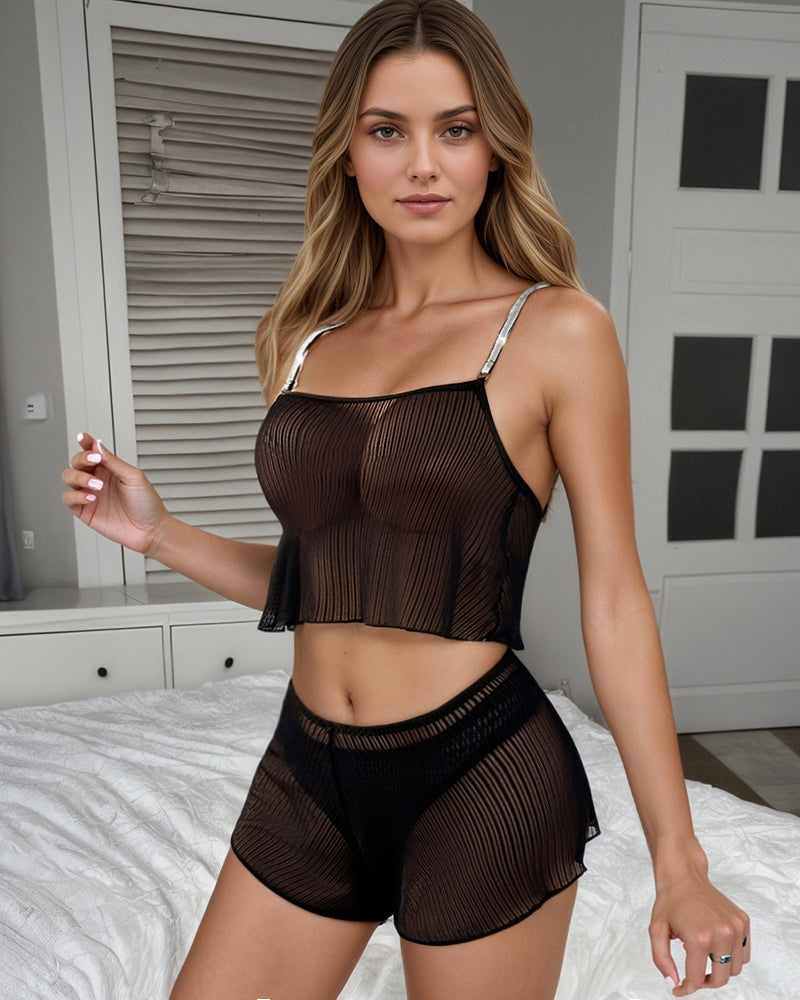
You might keep your favorite soft shorts but swap the ancient tee for a stretchy bralette with a wide band and a matching camisole, or choose a knit slip dress that skims without squeezing. Sleepwear that makes you feel confident and at ease can bridge the gap between cozy and sexy. The goal is not to impress someone else; it is to find pieces that let you be touched, seen, and comfortable at the same time.
If budget is tight, focus on one upgrade: a soft robe in a color you love, a matching bra‑and‑shorts set that works under clothes and as loungewear, or a simple cotton nightgown that feels like a cloud instead of a costume. Over a year of seven‑hour nights, you will spend well over 2,500 hours in whatever you pick; that is a lot of time to feel either “meh” or mildly gorgeous.
A Simple Experiment To Rewire Your Pajama Habit
To see how much your sad‑day pajamas really affect you, try a tiny experiment over the next week. On the first few nights you feel low, let yourself wear the usual baggy set and notice your mood, how long it takes to fall asleep, and how you feel in your body. On the next few low nights, switch to your intentional comfort set—the loose, soft, but consciously chosen pieces—and check the same things.
Sleepwear researchers who compare different fibers and fabric blends point out that these choices can influence comfort, body temperature, and sleep quality. If your brain and body feel even slightly more cared for in the second scenario, you have proof that your pajamas are not neutral; they are part of your emotional toolkit.

You deserve pajamas that love you back. Keep one pair of old, baggy favorites if they honestly feel like a hug, but start curating a few cozy, affordable pieces that say “I am still worthy of softness and a little sparkle, even on my messiest nights.”


 Secure Checkout


