
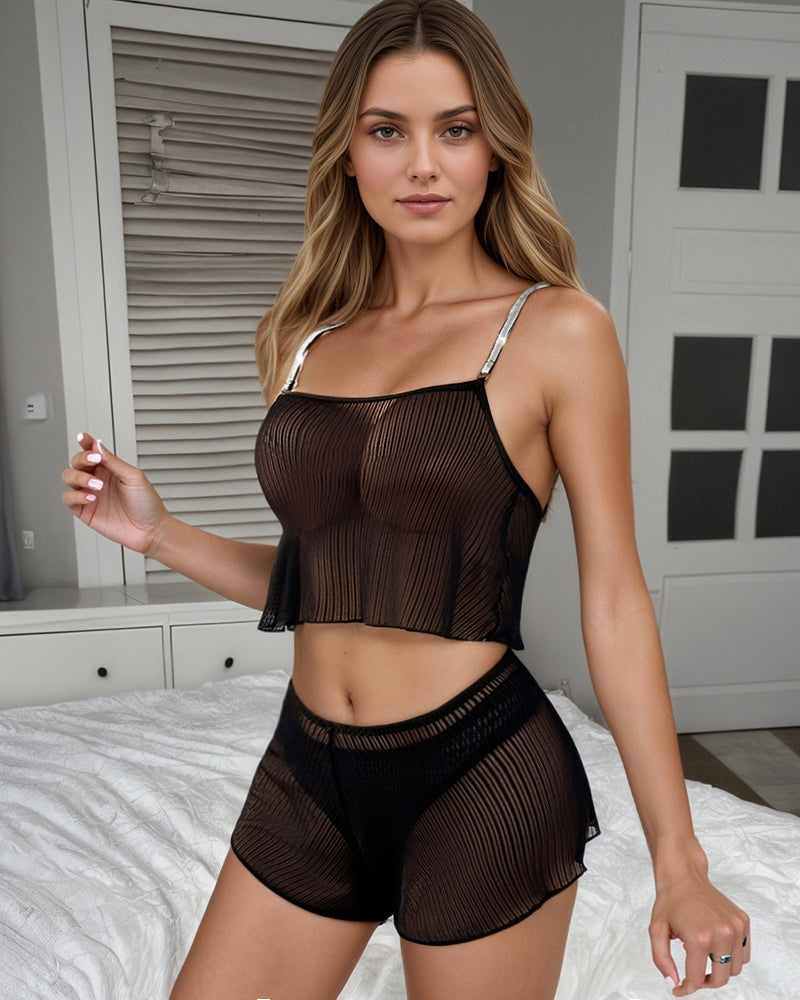


Black lingerie turns your body into visual armor on camera, carving out clean, confident lines that feel more controlled and commanding than most colorful sets ever will. This article explores why black reads as powerful in photos, from psychology and fashion history to practical styling for shoots.
Imagine standing in front of the mirror before a shoot, torn between a sweet pastel bra set and that unapologetic black lace you only wear on "special" nights. You want to look sensual, sure, but mostly you want to look like the main character, not the accessories. When you understand how black lingerie works with your psychology, your curves, and the camera, you can step into any shoot feeling powerful instead of just pretty.
Power Starts In Your Head, Not On The Hanger
Lingerie is not just fabric; it is a mood switch. Writing on the psychology of lingerie and mood shows that knowing you are wearing something beautiful and intentional under your clothes can lift your self-esteem, change how you stand, and make you feel more in control of your day, even if no one else ever sees it. That same internal shift shows up in front of the lens as relaxed shoulders, taller posture, and bolder eye contact, which is exactly what reads as "power" in a finished photo, not the price tag on the set itself. Psychology of lingerie and confidence
Attraction-focused lingerie advice also points out that the right cut and fabric do more than decorate you; they emphasize symmetry, balance, and curves in ways that align with what our brains tend to read as attractive. When bras, panties, bodysuits, and corsets support your shape rather than fighting it, you feel less distracted by straps digging in or cups gaping and more free to actually play with the camera. That freedom is what lets the "you run this" energy come through in every frame. How lingerie enhances attraction and confidence
What Black Says On Camera That Colorful Lingerie Does Not
Color carries a message before you even strike a pose. Lingerie color guidance consistently associates black with sophistication, mystery, and a quietly dominant kind of seduction, while reds feel fiery and attention-seeking and pastels skew soft, romantic, or "approachable." When the goal is to look like you are calling the shots rather than just inviting attention, black is the shade that signals strength and self-possession first.
On camera, that message gets amplified. Black absorbs more light, which naturally deepens shadows along your waist, under the bust, and around the hips, making the shape of your body the main storyline instead of the color of the fabric. Bright or pastel sets tend to pull the viewer's eye toward the bra itself, while black lets the eye trace lines and angles: the curve of your back, the set of your shoulders, the tilt of your chin. That is exactly the kind of compositional focus fashion photography uses to communicate authority.

Fashion historian Valerie Steele has described clothing, including lingerie, as a kind of "chic armor" that women use on their own terms, and emphasizes that garments do not have fixed meanings; their power is socially constructed and constantly renegotiated. When a woman chooses black lingerie in a shoot context, she is leaning into a visual language that culture already links to authority and composure, then rewriting it with her own body and story. Reconstructing the meaning of fashion
Black Lace: Centuries Of Status Wrapped Around Your Curves
Black lingerie is powerful, but black lace is a whole other spell. Lace itself was born as a luxury reserved for the elite; in 16th-century Europe, painstaking handmade pieces sat on the collars and cuffs of monarchs and nobles as visible proof of wealth and rank. Contemporary fashion writing describes lace as delicate yet strong, modest yet revealing, and notes that its modern revival builds on this long history of status, elegance, and quiet power. Sheer dive into lace
Exhibitions devoted to lace trace it from early openwork textiles on royal garments to its appearance in high-fashion and political wardrobes in recent decades, including modern first ladies and designers who treat lace as an "emotional" textile that carries memories of rites of passage like weddings while still flirting with eroticism. On runways and in museum shows, lace is positioned as a material that can express everything from innocence to kink, domesticity to grandeur, depending on how it is cut and styled. Threads of power exhibition
In bridal fashion, lace remains the go-to for gowns that feel luxurious and meaningful, not just pretty. Designers talk about lace as a way to add depth, texture, and romantic symbolism to wedding dresses, whether it appears as a subtle trim or takes over the entire silhouette. That association with "once-in-a-lifetime importance" follows lace into lingerie: when you wear black lace in a shoot, you are borrowing that same language of ceremony and significance and turning it inward onto your own body.
Modern sourcing guides for designers make a clear distinction between traditional light-colored lace and black lace. Traditional white or ivory lace is tied to classic, ceremonial looks, while black lace is framed as the bolder, more contemporary option that brands reach for in eveningwear, alternative bridal looks, and statement pieces where the goal is drama and impact. That is exactly the energy fashion photography leans on when the brief is "strong, sexy, and unforgettable."
Why Black Lingerie Is A Photographer's Secret Weapon
From a photographer's point of view, black lingerie is a dream for sculpting the body. The contrast between skin and black fabric creates clean lines that help define your waist, the curve of your hips, and the shape of your legs, especially under directional studio lighting. Lace and mesh add tiny pockets of transparency that catch highlights and shadows, giving depth and texture so a simple pose looks more three-dimensional and intentional. Lace historians and designers talk about this light-and-shadow play as core to what makes lace visually powerful; the camera amplifies that effect.
There is also a very practical side to this. Structured lingerie pieces like bodysuits, corsets, and shapewear smooth and contour the body while supporting better posture, often creating an hourglass effect that boosts both how the wearer feels and how they are perceived. On camera, that translates into fewer adjustments mid-shot, less fidgeting, and more consistently strong angles because the garment is doing some of the sculpting for you.

Black lace bras have earned their reputation as wardrobe workhorses precisely because they handle double duty: they are sensual, sophisticated, and useful every day. Well-made styles use sheer, body-skimming lace that enhances natural curves while still offering the support needed for long wear. That means when you step onto set in a black lace bra, you are not gambling with comfort; you are wearing something designed to move with you while still reading as luxe and intentional in high-resolution images.
To show how this plays out visually, think about black versus color as two different scripts you can hand the viewer.
Aspect |
Black lingerie |
Colorful lingerie |
Mood on camera |
Controlled, mysterious, commanding |
Playful, romantic, or high-energy depending on shade |
Body focus |
Emphasizes lines, curves, and pose |
Pulls focus toward the garment itself |
Styling message |
"I chose power and polish first, seduction second" |
"I chose fun, flirtation, or cuteness; power is secondary" |
Risk factor |
Can skew intense if styling is heavy |
Can skew juvenile or costume-like if color and cut clash with the mood |
Neither script is "wrong." The question is which one matches the story you actually want your photos to tell.
How To Choose Black Lingerie That Actually Feels Empowering
Powerful photos start with pieces that feel good on your body, not just look good on a hanger. Lingerie experts who focus on mood and confidence emphasize that comfort and good fit are nonnegotiable if you want your underwear to work as a psychological tool instead of a distraction. When fabrics are breathable and soft and the design supports your natural shape, you stop thinking about what you are wearing and start thinking about how you want to move.
Fit matters even more in black because the whole point is to project control, not discomfort. Get your band size right so it sits snug but not restrictive around your rib cage, make sure cups contain your breast tissue without spillage or gaping, and adjust straps so they support without carving into your shoulders. The same goes for panties: they should sit flush on your hips without cutting in or constantly rolling down. When that foundation is solid, every change of pose feels intentional rather than like you are fighting your outfit.
It can also help to match silhouettes to the parts of your body you want to highlight. Guidance on choosing lingerie by body shape suggests that high-waisted panties are great for elongating the torso and framing the waist, balconette or plunge bras show off the neckline and collarbones, and bodysuits create a long, continuous line from shoulders to hips. None of this is about "fixing" anything; it is about choosing a black canvas that supports whatever pose makes you feel most like a force of nature.
For shoot-specific styling, pay attention to texture and coverage. A matte black mesh bodysuit will photograph very differently from glossy satin or heavily embroidered lace. Smaller lace motifs read softer and more romantic; large-scale patterns and strategic sheer panels look bolder and more graphic. If you want maximum power, aim for pieces that show enough skin to feel intentional but leave some things implied; that tension between revealed and concealed is where black really dominates. Lace yourself for impact
When Color Deserves A Cameo (Without Losing Your Power)
This is not a crusade against color. Color psychology around lingerie is clear that different shades highlight different facets of your personality: red leans into passion and boldness, pastels into tenderness and romance, and light tones into freshness and new beginnings. Black, on the other hand, is the one that consistently signals mystery, strength, and an independent streak. If the brief of your shoot is "romantic but still in charge," it makes sense to let black carry the power while color plays a supporting role.
In practice, that might mean pairing a black lace bra and thong with a red silk robe you can slip on and off between shots, or wearing a black bodysuit under a pastel blazer for a fashion story that hints at softness without sacrificing authority. You can also layer color in your accessories and glam: a berry lip, colored heels, or statement jewelry will read as deliberate styling choices around a strong black core instead of competing for attention with a bright bra. The more your styling looks curated rather than chaotic, the more the viewer reads "powerful person with a point of view" instead of "pretty colors, not sure who she is."
If you truly feel most yourself in color, use black strategically in the parts of the look that frame your body and your gaze. A black harness over a jewel-toned bra, black stockings with a pastel garter belt, or a black lace bodysuit under a translucent tinted dress lets you have fun with shade without losing the clarity and structure that black gives the overall image.
A Quick Shoot-Day Playbook
Before you ever step in front of the lens, decide the story you want your images to tell: boss, enchantress, soft but unbothered, or something in between. Choose at least one well-fitting black set that supports that story, ideally with a mix of textures like lace or mesh to give the camera something to play with. Add color as an accent if you like, through robes, accessories, or makeup, but keep the main lingerie in black if power is the headline you want. Then, once you are on set, let the lingerie do its job while you do yours: breathe, take up space, and hold eye contact with the camera like it is lucky to be there.
FAQ: Black Lingerie And Photoshoots
Will black lingerie make me look slimmer or bigger on camera?
Black is often said to be "slimming," but the more important effect in photos is that it simplifies shape. Because it does not reflect as much light as bright colors, black tends to minimize visual distractions like tiny wrinkles in fabric and draws the viewer's eye along lines and curves instead. If the piece fits well and the cut flatters the way you like to stand and sit, black will usually help the camera read your body as more sculpted and intentional, regardless of size.
What if I feel more like myself in color; should I skip black altogether?
Absolutely not. If a head-to-toe black look feels too intense, use black wherever you want the power to sit and let color handle the mood. For example, wear a black lace bra under a sheer colored blouse, or a black bodysuit with a bright skirt. That way, your photos still benefit from the authority and clarity that black brings to the frame while your favorite colors keep the images feeling authentically you.
When you strip away the trends and the lingerie marketing, the rule is simple: power in photos comes from alignment between how you feel and what the image says. Black lingerie, especially in lace and structured shapes, just happens to make that alignment easier by giving your body cleaner lines, your story more gravitas, and your confidence a darker, richer canvas to shine through.


 Secure Checkout


