
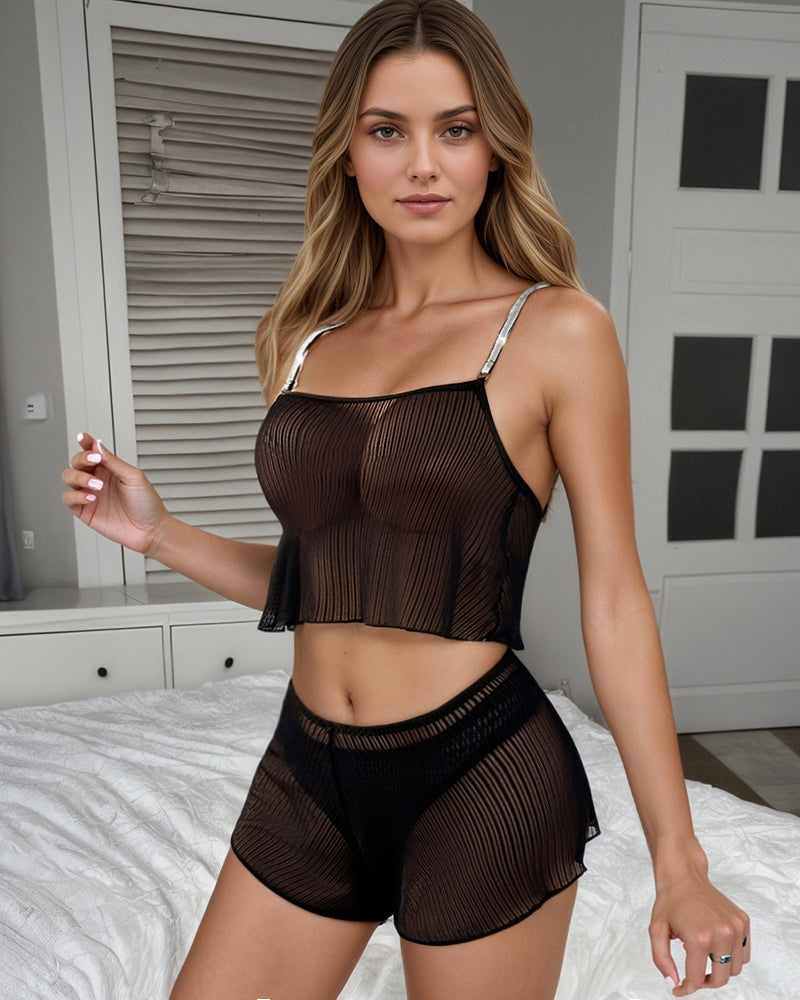




We judge our bodies more harshly in lingerie because it strips away the everyday "armor" of clothes and activates deep cultural rules about beauty, sexuality, and morality.
You know that moment: you feel pretty cute in your jeans and T-shirt, then two minutes later you're in the bathroom in a bra and panties wondering when your stomach became a public enemy. Under harsh mirror light, you stop seeing a whole person and start zooming in on every pinch, crease, and wobble. The good news is that nothing went "wrong" with your body; you've just stepped into a garment category loaded with expectations, double standards, and history. Once you see those rules, you can start using lingerie for support and pleasure, not as a weekly performance review for your thighs. By the end of this, you'll understand why the mirror gets mean in lingerie and have concrete ways to calm it down before your next date night or solo-at-home glam session.
What Makes Lingerie Feel So Intense?
Lingerie is not just smaller clothing; it is designed to sit directly on your skin, often with delicate fabrics, lace, and cuts that emphasize breasts, hips, and butt. Guides for intimate apparel describe it as undergarments that combine support, modesty, and sensuality, and they claim it can help you feel beautiful "from the inside out" when the fit and fabric actually work for your body's needs and shape. Lingerie is about function and fantasy at the same time, which is a potent mix.
Street clothes do a lot of quiet emotional work. They provide warmth, pockets, and a sense of belonging to a group, whether that's "office casual," "gym rat," or "Sunday-errands sweats." Anthropological work on traditional dress shows how garments can encode status, courage, and group values at a glance, like the bright Maasai shúkà and ceremonial lion's mane headdresses that literally wear bravery on the body. Traditional clothing When you're fully dressed, you are wrapped in symbols of identity that feel protective.
Lingerie, by contrast, turns the volume way up on vulnerability and sexuality. Erotic and intimate lingerie across cultures has long been used to signal femininity, status, fertility, and desire, from elaborate ritual undergarments in ancient societies to today's silk, lace, and mesh sets that mix heritage motifs with modern cuts. So when you're judging your body in lingerie, you're rarely judging just your body; you're judging whether you measure up to centuries of scripts about what a "desirable" or "good" woman looks like nearly naked.
Here is the emotional difference in simple terms:
Street clothes |
Lingerie |
Meant for public, mixed audiences |
Meant for you, your mirror, and maybe a partner |
Signals role, status, and taste |
Signals sexuality, desirability, and intimacy |
Feels like armor or uniform |
Feels like exposure and confession |
Easy to treat as "just clothes" |
Easy to treat as a verdict on your body |
When we forget that lingerie is a costume sitting on top of a human life, we let a bra band decide our worth.

How Culture Teaches You to Police Your Body in Lingerie
One reason the lingerie mirror feels harsher is that you've been marinating in beauty rules since childhood. Cultural analyses of beauty norms show that ideas of the "ideal" body change wildly over history and geography, from tiny bound feet and heavy neck rings to extreme tanning and strict thinness, yet people repeatedly risk health, comfort, and money to chase whatever standard is in fashion. culture influences beauty That obsession does not magically switch off when you slide into a lace thong; if anything, it intensifies.
In many places, lingerie is framed as both empowerment and test. Historical and fashion reporting on American lingerie describes how corsets, bras, girdles, and teddies have moved from tools of strict hourglass shaping to symbols of sexual power and then to confidence-boosting everyday essentials. American women’s lingerie But empowerment has often been sold alongside narrow beauty ideals and punishing diet culture, especially in eras dominated by ultra-thin, heavily retouched imagery and big-budget lingerie shows. The message is subtle but relentless: lingerie is for you, but only if your body looks like the ad.
Research on sexualized clothing backs up what you probably feel in your gut. When women talk about "sexy" clothes, they describe worrying that others will read their outfits as signals of morality, authenticity, and whether they are "good" or "immoral." Interviews with almost a hundred women found that they anticipate scrutiny and moral judgment around revealing or sensual dress, and that age, motherhood, and social class all change what is considered "appropriate." That kind of monitoring does not stay outside the bedroom; you internalize it and start judging yourself the same way the world might.
On top of that, there is the celebrity double standard. Lingerie shots from famous women are often praised as bold, empowered branding. Everyday women are more likely to be labeled "attention-seeking" or "slutty" for similar photos, which a recent cultural commentary called the "lingerie paradox." You learn that female sexual expression is acceptable when packaged as distant, glamorous content, but risky when it is personal, local, and tied to your real life. No wonder stepping into lingerie in your own bathroom can feel like stepping into a courtroom.
Even brands that market body positivity can complicate your feelings. One celebrated lingerie label became a feminist cult favorite for its unretouched campaigns and inclusive imagery, then faced allegations of conspiracy-driven politics and a toxic workplace. Customers who had treated those bras as a "love letter to themselves" suddenly felt tainted wearing them in public. That shows how quickly lingerie can shift from a confidence symbol to a shame object when the surrounding story changes, even though the fabric on your body is identical.

All of this trains you to see lingerie as a morality test, not a tool. So when you catch your reflection half-dressed, you are not only checking fit; you are silently asking, "Do I pass as desirable? Respectable? Empowered? Good?"
Why the Mirror Hits Harder in a Bra Than in a Blazer
There are some very practical reasons the critique gets louder when you are in lingerie, and none of them mean your body got worse between the closet and the bedroom.
First, there is simple surface area. A bra and panty set exposes far more skin than jeans and a T-shirt, especially around areas you have been taught to hate: stomach, hips, butt, upper thighs. Because lingerie is cut to highlight curves, any softness or texture is front and center. You cannot blame the "unflattering dress" anymore; you feel like there is nowhere to hide. Your brain, trained by years of body-zooming selfies and diet ads, goes hunting for flaws.

Second, lingerie strips away what social psychologists call symbolic protection. Clothing does not just keep you warm; it signals your group, your role, and your worldview, from religious dress to sports jerseys to punk jackets. Research on dress and existential threat suggests that under anxiety, people lean into more physically protective and group-typical clothes—more layers, tougher fabrics, more obvious in-group markers—to feel safer and less alone. When you are down to a bra, you have peeled off most of those visual shields. Of course you feel exposed; you are temporarily stepping out of your usual social armor.
Third, lingerie sits at the intersection of public rules and private emotion. Workwear is about status and competence. Workout clothes are about performance. Lingerie is about intimacy. Articles on intimate apparel describe lingerie as a private emotional language where color, fabric, and style hint at mood and personality. That means the stakes feel higher: criticize your lingerie body and you are not just critiquing how you look; you are critiquing how lovable, sexy, or "too much" you fear you might be.
If you want a quick reality check, try a low-tech experiment. Take two mirror selfies from the same angle: one in your favorite jeans and soft T-shirt, one in a comfortable bra and underwear that actually fits. Then notice how your attention shifts. Most people describe seeing an overall vibe in street clothes but zooming in on specific body parts in lingerie. The body did not change in those 30 seconds; only the stories around the outfit did.
The Money and Morality Trap Around Lingerie
There is another layer that quietly amps up self-judgment: the idea that the "right" lingerie proves you are ethical, stylish, and successful all at once. Writing on ethical lingerie calls this a moral paradox. To pay fair wages, use good materials, and offer inclusive sizing, small brands must charge more, so only people with enough disposable income can express their values through lace and elastic. Meanwhile, mega-brands can keep prices low by spreading production over huge, often opaque supply chains.
If you can barely justify a new bra, it is easy to turn every purchase into a referendum on your values: "If I cared about workers, I'd save up for the pricey set," or "If I loved my body, I'd invest in something nicer." In reality, you are navigating a global industry that was worth tens of billions of dollars by 2021 and shaped by huge fashion and economic forces, not just your shopping cart. Your worth is not hiding in a tag that says "ethically made" or "on sale."
Remember too that many supposedly "perfect" lingerie images sit on top of extreme beauty practices. Historical and cultural reviews of beauty standards show everything from foot-binding and skull-shaping to modern crash diets, bleaching creams with toxic ingredients, and excessive tanning that raises skin-cancer risk. Compared to that, choosing a comfortable, affordable bra in your actual size is already quietly rebellious.
Flip the Script: Practical Ways to Judge Yourself Less and Enjoy Lingerie More
It is one thing to know the system; it is another to stand half-naked and feel different. Here are grounded shifts that actually change how the mirror feels on a Tuesday night and before a romantic occasion.
Redefine What "Success" in Lingerie Looks Like
Instead of asking, "Do I look like the model?" ask, "Can I breathe, move, and forget about it once it is on?" Lingerie guides emphasize support, comfort, and highlighting what you already like about your body as the real goals, whether that is a lifted bust, a smoother line under a dress, or simply soft fabric that does not itch. That definition works at any size and budget.
For a special date or anniversary, think in terms of how the night will actually unfold. If you are going out to dinner first, choose a set that will still feel good after dessert: a bra with wider straps, a panty cut that does not dig when you sit, fabric that does not trap sweat. Romance is a lot easier to enjoy when you are not secretly counting the minutes until you can peel your bra off.
Treat Fit as Body Care, Not a Character Test
A too-tight band or cutting thong will make any body look and feel miserable. Modern lingerie history and fit advice stress that supportive structures can improve posture and reduce discomfort when they match your actual body, not your fantasy size tag. When you switch from "I should fit into this" to "this should fit me," you move the failure off your body and onto the garment, where it belongs.
If money is tight, start with one everyday bra and one pair of panties that truly fit, even from a basic line. Comfort does not require silk; breathable cotton or smooth microfiber in the right cut does more for your confidence than an expensive lace mistake. Every time you wear those pieces, remind yourself: this is maintenance, not a makeover; you are caring for a body that is already worthy of good engineering.
Separate Your Body From Brand Drama
When a brand you loved turns out to have ugly politics or bad labor practices, it is normal to feel weird in those pieces. Some women stop buying new items but keep wearing their existing ones because they fit well and were pricey investments, sometimes reserving them for private settings. That compromise is valid.
You are allowed to keep wearing an old bra while also deciding your future dollars will go elsewhere. Think of it like finishing the carton of eggs you already bought before changing grocery stores. Let the brand's reputation live on the label, not on your skin.

Experiment With Visibility on Your Own Terms
The trend of lingerie as outerwear treats corsets, bodysuits, and bralettes as deliberate fashion statements, not secret underlayers. lingerie outerwear For some, wearing a lace bodysuit under a blazer or a structured bustier over a T-shirt boosts confidence and reshapes how they see their own curves—more "I own this" than "I must hide this."
If that appeals to you, start small. Try a bralette peeking from under a slightly unbuttoned shirt on a casual night out, or a slip dress layered over a fitted T-shirt. The goal is not to look "daring" but to give yourself new visual evidence: your body in lingerie can look stylish, powerful, and very normal in public space, not just like a before/after project in the bathroom.
Talk Back to the Mirror Like You Would to a Friend
When you catch yourself spiraling in self-critique, imagine your closest friend standing where you are. Would you say, "Your thighs are disgusting," or would you say, "This color on you is gorgeous, but maybe try a different cut if you want more support"? Give yourself the friend version. It sounds cheesy; it works. Over time, those little corrections retrain what your brain considers a "normal" inner monologue around your body.
If a piece consistently triggers harsh thoughts, that is data. It might be the wrong size, the wrong cut for your shape, or simply woven from a story that no longer fits the life you are building. You do not have to keep every item that came with a fantasy or a breakup attached.
Closing
Your body is not harsher in lingerie; the stories around lingerie are. You have been taught to treat these tiny scraps of fabric as tests of morality, desirability, wealth, and political virtue, when in reality they are just tools—some supportive, some scratchy, some wildly cute, none capable of measuring your worth. Choose what fits your shape, your budget, and your actual life, and let the rest of the noise fall to the bedroom floor with yesterday's bra.


 Secure Checkout


