
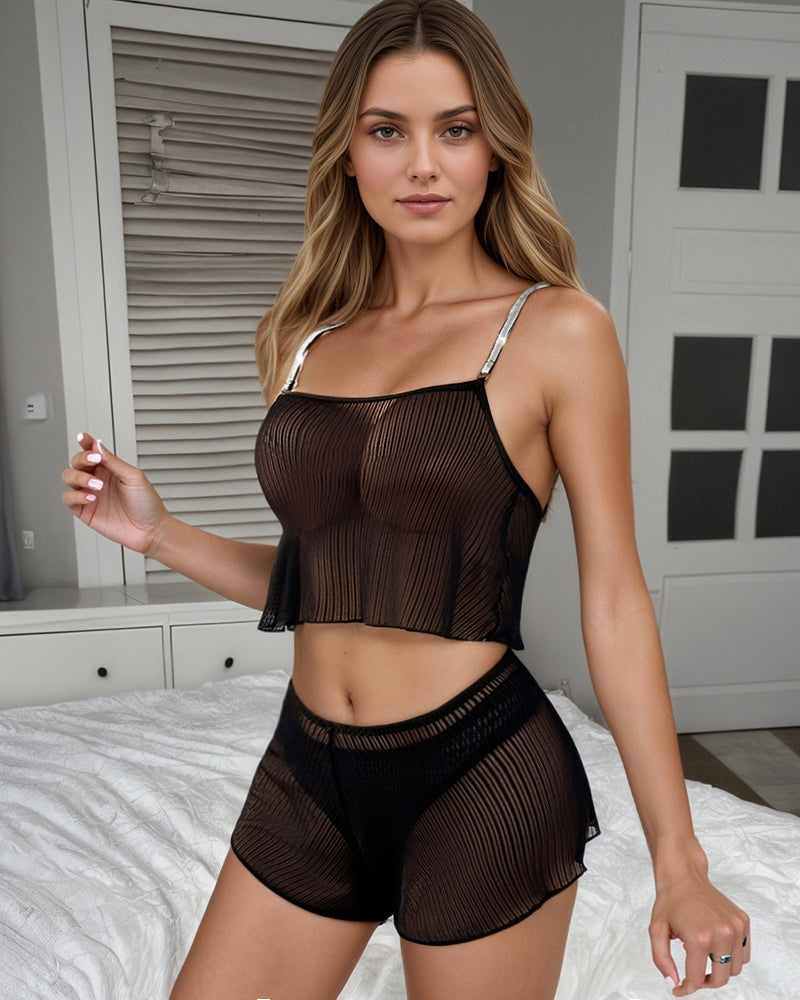




If you learn three simple measurements at home and actually use size charts, you can order lingerie online with fewer surprises than most rushed in-store fittings.
The package arrives, you rip it open, squeeze into the bra or bodysuit, and within thirty seconds you already know it is going back. The straps dig in, the band rides up, or the thong is doing unspeakable things to your butt. When you swap guesswork for three specific measurements and pair them with smart size charts, your orders start arriving ready-to-wear instead of ready-to-return. This guide walks you through which numbers to take, how to use them, and how to turn those numbers into lingerie that actually loves your body back.
Why Your “Usual Size” Keeps Failing You
Estimates suggest that around 80% of women are walking around in the wrong bra size, which is a big reason so many orders end up back in the mail instead of in your drawer. The mismatch is tied directly to how inconsistent bra sizing is across brands and styles. An overview of bra size trends explains that band and cup labels are not standardized and that your tag can change as fabrics, cuts, and your body change. Bra fit tools echo the same message: a 34C from one brand can fit very differently from a 34C somewhere else, so the printed size should be treated as a starting point, not gospel. A multi-system bra size calculator stresses that differences in manufacturing mean apparently identical sizes can wear completely differently, which is exactly why your “usual size” keeps betraying you.
That chaos is not just a bra problem. Apparel size charts for everything from jackets to pants show that a single letter size can cover a wide range of bust, waist, and hip measurements, so two women with very different bodies both end up in the same size label while the fit looks and feels nothing alike. A general apparel chart mapping letter sizes to bust, waist, and hip ranges demonstrates that each size often spans several inches of difference in each area, which is great for mass manufacturing and terrible for precise lingerie fit. When you are dealing with lace, mesh, and elastic around sensitive areas, “close enough” based on dress size is exactly how you get digging bands, rolling waistlines, and that ugly return label.
The good news: your body is not the problem. The system is. And three measurements can help you beat it.

The Three Measurements That Beat In-Store Shopping
Accurate bust, underbust, and hip measurements are the foundation of good lingerie fit, and lingerie fit guides consistently point to those numbers as the key to comfortable, supportive, and flattering pieces. A sizing guide for buying the right lingerie highlights bust for cup-related garments, underbust for bra support, and hips for briefs and bodysuits, all matched to each brand’s chart rather than a vague dress size. A detailed lingerie fit overview stresses that measuring correctly is step one, and cross-checking those numbers with garment-specific size charts is step two. Sewing and pattern resources agree: measure bust, waist, and hips over thin clothing using a flexible tape or even a string plus ruler if needed, and then choose the size whose measurement range actually matches your body instead of hoping your usual size magically fits every cut. A size-choosing guide for home sewists lays out this measurement-first approach clearly, and it translates perfectly to lingerie shopping.
Measurement 1: Underbust – Your Bra Band’s Truth Serum
Your underbust is the measurement around your ribcage, directly under your breasts where the bra band sits, and it is the main thing keeping your boobs lifted rather than hanging from your shoulders. A bra fit guide that focuses on home measuring instructs you to wrap a soft tape snugly around the ribcage just under the bust, keeping it level and rounding to the nearest whole inch or the next even band size. A band-and-cup sizing guide explains that this underbust number is your band size once you round it and that the band should feel snug and secure without cutting off your breathing. Another step-by-step bra fit guide echoes the same advice: measure under the bust with the tape firm but not painfully tight, use even numbers for band sizing, and treat that band as the foundation of support. A structured bra education resource adds that a level band that does not ride up your back is the number-one indicator of a bra that will actually work for you.

Try this in practice. Stand in front of a mirror wearing only thin underwear on top or a non-padded bra. Wrap the tape around your ribcage right under the bust, exhale normally, and pull the tape so it is snug but not biting into your skin. If you get 33 inches, round up to a 34 band; if you get 31.5, round to 32 or 34 depending on how firm you like your band. Check it against the fit checklist: a properly sized band should sit parallel to the floor, not ride up when you lift your arms, and allow you to slide one or two fingers under the elastic while still feeling supported. If you are used to loose bands, your real band size will feel more secure at first, but guides point out that bras stretch with wear and you can use an extender while a snug band breaks in.
Measurement 2: Bust – Matching Cup Volume to Your Actual Boobs
Your bust measurement is taken around the fullest part of your breasts, usually across the nipple line, and it is what determines how much cup volume you actually need. Lingerie fit resources recommend measuring this over a supportive, non-padded bra so that breast tissue is lifted into roughly the position it will sit in a bra, and then keeping the tape level around your back and lightly against your breasts without squashing them. A lingerie fit guide that emphasizes measurement-based shopping frames the bust measurement as the key input for cup size and for selecting upper-body garments like chemises and bodysuits. A lingerie fit overview encourages using that number alongside the underbust to avoid relying on a guess.
Cup size is essentially the difference between the bust measurement and the band size, and multiple bra-fitting tools use that same math. A calculator that converts bra sizes across different countries defines bust as the loose circumference over the fullest part of the breasts and band as the firm circumference under the bust, then uses the difference in inches to assign a cup letter. A multi-system bra size calculator explains that in the US and similar systems, a difference of about 1 inch corresponds to an A cup, around 2 inches to a B, 3 inches to a C, 4 inches to a D, 5 inches to a DD or E, and 6 inches to roughly an F or DDD. Another bra fit guide built for step-by-step home measuring uses the same “bust minus band” method and illustrates, for example, that a 6-inch difference between bust and band leads to an F cup once you count up the letters. A structured bra education resource gives a concrete example of a 38-inch band and 44-inch bust equating to 38F.
Here is what that looks like on an actual body. Suppose your underbust measures 34 inches, and your bust measures 38 inches over a non-padded bra. Your band size is 34 and the difference is 4 inches, which points to a 34D as your starting size. If you have been wearing a 36C because it was the only thing offered from an old fitting, that 34D will likely feel much more supportive in the band and less crushy in the cups, which is exactly what a calculator-style approach is trying to correct. Bra calculators and style guides emphasize that this math is a starting point, not the final word, because cup shapes, fabrics, and your breast shape still matter. A fashion article on measuring bras stresses that fit varies by brand and that you should treat measurements and charts as tools, not rigid rules. A bra measurement guide in fashion media reinforces that point by noting that bra sizing is not standardized and that differences in materials and silhouettes will tweak how a given size fits.

Measurement 3: Low Hip – The Secret to Panties and Bodysuits That Actually Stay Put
For panties, garter briefs, and bodysuits, the number that keeps everything from cutting into your hips or sliding down is your low-hip measurement. Lingerie fit resources describe this as the circumference around the fullest part of your bottom where your buttocks stick out the most, and they tie that directly to choosing sizes for briefs and bodysuits. A guide to buying the right size lingerie points out that bust drives upper-body sizing while the hips, measured at their fullest point, should be used for briefs and bodysuits, especially when top and bottom proportions differ. A lingerie fit overview takes this measurement-first approach so you can pick panties that move with you instead of fighting you. Sewing-fit guidance adds that the fullest part of the hips is typically around 8 to 9 inches down from the waist, but that the exact level can vary with body shape, so watching where your butt is actually widest in a mirror is more helpful than assuming a fixed distance. A home sewing size guide makes that clear and reminds you to keep the tape flat and parallel to the floor.
To measure your low hip, stand with your feet hip-width apart, look sideways in a mirror, and find the point where your butt sticks out the most. Wrap a tape or a piece of string around that point, parallel to the floor, over thin underwear only. If you are improvising with a string or charger cable, mark where it overlaps, lay it flat against a ruler, and note the inches, just as sewing resources recommend when a tape is not available. A home sewing size guide shows that string-and-ruler workaround explicitly, and it works just as well for lingerie. Now imagine your low hip is 45 inches while your waist is 32. A general apparel size chart that maps letter sizes to bust, waist, and hip measurements shows that a single size can span several inches of hip, meaning your waist might land in one size and your hips in the next. A detailed apparel size conversion chart illustrates these wide ranges, which is why people with fuller hips often do better choosing the panty size that fits the hips and letting the waist be slightly looser. That is how you avoid thongs that feel like they are trying to saw you in half.

How to Use These 3 Numbers to Outsmart In-Store Sizing
Once you have underbust, bust, and low-hip measurements written down, the magic happens when you combine those numbers with each brand’s size chart and fit notes. Lingerie retailers that focus on fit consistently recommend matching your measurements to their specific charts and reading any notes about whether a style runs small, large, or uses very stretchy fabrics. A guide to buying the right size lingerie emphasizes doing exactly that, particularly for unusual cuts or highly elastic styles. Many online lingerie shops also tell you to use your current bra or dress size as a sanity check and then refine using charts. A lingerie sizing guide that blends dress and bra cues encourages starting from your usual size and then using a chart and simple measuring instructions so you can fine-tune your choice instead of guessing blind.
In practice, this means you pick a brand, open its size chart, and find the row or column that includes your underbust for the band size, then use your bust measurement to select the suggested cup. You check whether your usual bra size is close to that suggestion; if it is, that is a good sign, and if it is not, you have a clear explanation for why your old bras felt off. For panties, bodysuits, and suspender briefs, you look for the sizes whose hip range actually includes your low-hip measurement, even if that means going up a size from your usual jeans. Detailed charts that relate bust, waist, and hips to letter and numeric sizes help bridge the gap between your numbers and what a brand calls “medium” or “XL,” and an apparel chart that lists Missy and Plus sizes by body measurements demonstrates exactly how this mapping works. A multi-category size chart shows this approach for general clothing, and lingerie brands use the same logic in their own charts.
This table sums up how each of your three core measurements works for you.
Measurement |
Lingerie it helps with |
What a good match feels like |
Underbust (ribcage) |
Bra bands, bralettes with band sizing, longline bras |
Band sits level, snug but breathable, no riding up when you move |
Bust (fullest part) |
Bra cups, chemises, bodysuits with cup sizes |
Cups are filled without overflow or gaping, center front lies flat |
Low hip (fullest butt/hips) |
Panties, garter briefs, bodysuits, teddies |
Fabric lies flat without cutting in or sagging, no rolling at leg or waist |
If you want to get more granular, calculators and community tools can refine your size based on several measurements at once. An online bra calculator uses bust and band measurements in multiple systems to estimate sizes and then recommends testing nearby sizes for comfort signals. A multi-system bra size calculator does this across US, UK, EU, and more. Another fit resource favors taking several measurements on bare skin to adjust for tissue softness and shape. A specialized bra-fitting calculator community builds its guidance around that approach. These tools do not replace trying things on, but they can dramatically narrow the field before you ever hit “add to cart.”
Real-World Example: From Serial Returner to One-and-Done Orders
Picture someone who has always worn a 36C because that is what a sales associate handed her once, even though the band creeps up and the cups sometimes overflow. She decides she is done playing Return Roulette and grabs a soft tape at home. Her underbust measures 33 inches, which rounds to a 34 band, and her bust measures 40. That 6-inch difference points toward about a 34F. Suddenly the math explains why 36C felt like a compromise: the band was too loose to carry the weight, and the cups were too small for the volume.
She pulls up her favorite online brand’s chart. It suggests a 34F in their underwire balconette, and the fit notes say this style runs true to size in the band but a bit shallow in the cup. Because she knows her bust is full, she orders a 34F and a neighboring cup size as backup instead of randomly grabbing her old 36C. She does the same with panties, measuring a 44-inch low hip that lines up with the brand’s XL, even though she has been squeezing into a labeled medium. When the order arrives, the 34F sits secure on the middle hooks with smooth cup edges, and the XL thong lies flat across her hips without digging in. One bra goes back because she ordered a backup size; the rest of the set stays. The difference is not luck; it is that her measurements were driving the size choices instead of her ego and that faded memory of a mall fitting.
Common Pitfalls That Keep You Returning Packages
Winging it from your dress size alone is one of the fastest ways to end up disappointed, because dress sizes are built to cover broad ranges of bust and hip measurements and clothing size charts show that one labeled size can span several inches in each area. A multi-category apparel chart that maps letter sizes to bust, waist, and hips demonstrates just how big those ranges are, which explains why two people who both “wear an eight” can have completely different experiences in the same lingerie size. A detailed apparel size conversion chart makes this variation obvious, and lingerie brands layer on even more variation with different fabrics and cuts.
Measuring over bulky clothing is another quiet saboteur. Fit guides across sewing and lingerie emphasize measuring over thin underwear or a camisole, keeping the tape flat and parallel to the floor, so the measurements reflect your body, not your hoodie. A size-choosing guide for home sewists spells out this “over underwear only” rule and specifies that the tape should be snug but not tight to avoid shrinking the numbers artificially, and that advice carries straight over to lingerie. A home sewing size guide describes this exact technique, and lingerie-focused guides adopt the same approach.
Pulling the tape too tight might feel like a win in the moment, but all it does is turn your bra into a torture device later. Bra fit resources stress “snug but not tight” for band measurements and a looser, non-compressing hold for bust measurements so you can actually breathe and move. A bra sizing guide outlines measuring the band snugly and rounding to the nearest whole number or even band size, and a separate step-by-step fit guide warns that the tape should not be so tight that it restricts a normal breath. A band-and-cup sizing guide and a structured bra education resource both call this out because a tape that is too tight leads to bands and cups that feel okay only when you are standing perfectly still and miserable as soon as you twist, sit, or breathe deeply.
Never re-measuring is another reason wardrobes are stuffed with “almost right” bras and panties. Fit guides that look at bra sizes over time point out that weight changes, pregnancy, hormonal shifts, and aging all move your band and cup size, sometimes in subtle ways, and that you should check in regularly rather than clinging to a number from years ago. An overview of bra sizes recommends getting re-measured every six months to a year or any time your body or comfort noticeably changes, while home measurement guides encourage a fresh set of numbers before each big purchase or when your current bras start leaving marks or riding up. An overview of bra size trends and a band-and-cup sizing guide both talk about size shifts over time, and those shifts absolutely affect how your lingerie orders land.
Finally, ignoring brand notes and style differences throws away a lot of easy information. Lingerie fit guides highlight that balconettes, sports bras, and bralettes all have different support and coverage levels, and that materials like firm mesh versus ultra-stretch lace behave differently even in the same numeric size. A guide to buying the right size lingerie tells you to read fit notes and size advice for each product because brands often flag when a style runs small, has extra stretch, or is cut narrow in the cup or hips. A lingerie fit overview frames this as non-negotiable, and it is an easy habit to add once you have your three core measurements ready to plug into the size chart.
Quick FAQ
Do you really need to measure every time you order lingerie online?
You do not need a full measuring ritual every single order, but you should update your numbers any time your body or your comfort in existing pieces changes. Bra fit resources note that weight fluctuations, hormonal changes, exercise habits, and aging can all shift your band and cup size, and one overview recommends professional fittings every six to twelve months or whenever you notice new pain, slipping straps, or cups that no longer sit right. An overview of bra size trends mentions these body changes, and a home bra sizing guide stresses that bra size is not fixed over time and should be rechecked when fit feels off. A band-and-cup sizing guide frames regular re-measuring as essential rather than optional. For panties and bodysuits, recheck hips when your pants fit differently or when you notice digging or sagging.
What if your breasts are two different sizes?
Most people have some asymmetry, and lingerie fit guides generally suggest fitting the fuller breast and using design features to balance the smaller side. That means choosing bras with stretch lace or foam that can accommodate slight differences, or styles with removable inserts so you can add padding on the smaller side. Bra calculators and fit communities that use multiple measurements and emphasize comfort encourage prioritizing the side that would otherwise spill out, then adjusting straps and padding so the smaller side feels supported. A specialized bra-fitting calculator community centers its advice on fit and comfort rather than matching a number perfectly, which is exactly the energy you want here.
Are online bra calculators actually worth using?
Yes, as long as you treat them as smart starting points and not as absolute truth. A multi-region bra size calculator that takes bust and band measurements provides estimated sizes in several systems and then explicitly recommends trying nearby sizes and focusing on how the bra feels once it is on your body. A multi-system bra size calculator also lists common misfit signs like bands riding up and cups gaping or overflowing, and it reminds you that manufacturer differences make calculated sizes approximate. Paired with your own underbust, bust, and low-hip numbers and a brand’s chart, calculators can help you narrow down your cart to a few realistic options instead of six random sizes “just in case.”
Your body is not “weird,” “too much,” or “too hard to fit” just because mass-produced lingerie has not caught up. Grab a tape, claim your three magic measurements, and start ordering like someone who expects their lingerie to fit the first time—because once the numbers are on your side, you have every right to.


 Secure Checkout


