
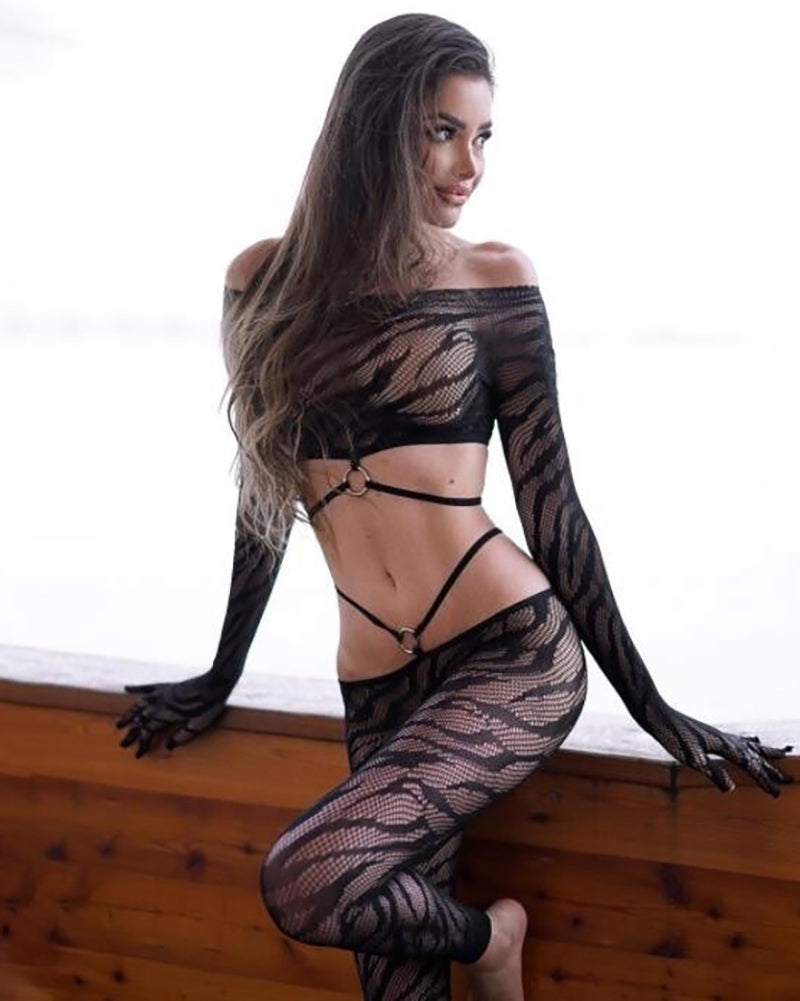


You know that moment when the heat kicks off, the wind howls against the window, and you’re standing in your prettiest lingerie thinking, “Cute… but I’m freezing”? That tug-of-war between cozy and seductive is real, and the outfits that actually get worn are the ones that keep you warm, let your skin breathe, and still make you feel irresistible. Here’s how to mix flannel and lace so you stay toasty, feel confident from every angle, and glide through a winter night focused on pleasure, not goosebumps.
Cozy Meets Sultry: Why Flannel And Lace Belong Together
Thick, soft fabrics that trap tiny pockets of air act like insulation, especially when their structure still lets heat and moisture move away from your skin, which is exactly what careful knit engineering aims to do in cold-weather workwear. Research on knitted fabrics used next to the skin shows that thicker but less dense materials can keep you warm while maintaining decent vapor permeability, which is a fancy way of saying “warm, not swampy.” Classic flannel, usually a brushed cotton or wool blend, sits in that sweet spot: soft, slightly fuzzy, and able to hold warmth without turning you into a human sauna during low-key activities like lounging or cuddling.
Cold-weather educators working in deep winter conditions, where average highs hover around 28°F and lows can fall near 2°F, teach a three-layer system: an inner layer to move moisture, a middle layer to insulate, and an outer layer to block wind and snow. Cold-weather educators in Grand Teton emphasize that each layer has a specific job, and that staying comfortable is about managing both warmth and sweat, not just piling on bulk. That logic works just as well on your couch as it does on a mountain trail: lace can play the inner “pretty” layer, flannel becomes your cozy middle layer, and a robe or blanket acts as a loose outer shell you can peel off as you heat up.
Testing layered fabrics for sportswear backs this up. Studies on bi-layer sportswear find that outfits with a breathable inner layer and thicker insulating outer layer provide high thermal resistance in cold conditions while still letting moisture escape. Translate that to romance: a breathable lace piece near your skin, flannel as the warm hug on top, and maybe a thicker robe or sweater when you dash to grab more wine. If the thermostat is set to 65°F and you’re usually chilly in a T-shirt and leggings, that lace-plus-flannel combo will feel closer to a light sweater set, with the option to shrug off layers as the night gets steamy.
On the style side, mixing flannel and lace taps into a long-standing fashion move: pairing structured or “masculine” pieces with soft, hyper-feminine ones. By the mid-1950s, women could wear full skirts, slim sheaths, or straight-cut suits and still be completely on trend, which opened the door to treating variety itself as chic instead of chasing one rigid hourglass ideal. A major visual reference on fashion design describes clothing as a language of signs, where silhouette, material, and historical quotation all communicate meaning in a look, and shows how designers constantly remix past codes to create new moods. Flannel reads practical, grounded, and a little rugged; lace reads romantic, vulnerable, and dressy. Combined, they send a message: “I’m soft, but I’m not fragile.”
Choosing Lace That Loves You Back
Lace is just fabric with intentional openings, which means it adds texture and glimpses of skin without requiring you to bare everything. The only rule is that you do not have to “earn” lace with a certain dress size, thigh gap, or flat stomach. You earn lace by wanting to wear it.
Start with how you want to feel when you are actually sitting, lying down, and moving around. If underwires dig in when you slouch on the couch, go for a lace bralette with a wider band instead of a push-up that only behaves in standing selfies. If waistbands cut into your lower belly when you curl up, pick high-waisted lace briefs or boyshorts that meet your soft spots instead of bisecting them. The pieces that become winter favorites are the ones you forget you’re wearing until someone else notices them.
Think in shapes, not sizes. If you like more support up top, a lace underwire bra with a slightly wider strap and a U-shaped back will feel more secure than a flimsy triangle bralette. If you’re fuller through the middle and prefer more coverage, a lace bodysuit with a bit of stretch and a higher cut on the leg can smooth under flannel without feeling like a shapewear prison. If you prefer a smaller-bust silhouette, sheer lace bralettes and demi-cups under an open flannel give softness without bulk. For example, someone who usually wears a size 18 jean and worries that teddies are “not made for me” often finds a lace bodysuit with adjustable straps, a snap closure, and a looser flannel shirt over top far more forgiving than a two-piece set that exposes every area they feel self-conscious about.
Color is your secret weapon. Black lace under dark flannel is low-key and moody; black lace under cream or soft plaid is bolder because the contrast draws the eye straight to the lingerie. If you’re shy about visible texture, match your lace roughly to your skin tone and let the flannel carry the visual drama. If you adore your bust and want it front and center, choose a lace shade that strongly contrasts with the flannel and make sure at least one or two buttons sit right above the fullest part of your chest so the fabric frames, not flattens, your shape.
Flannel As Your Winter Wingwoman
Cold-night dressing is really about planning for the microclimate you are in. In places where long winters bring heavy snow and temperatures hover just above or below freezing, educators focus on clothing systems that balance retained heat with moisture management so people stay safe and comfortable. That same three-layer logic applies indoors: your bedroom at 68°F with low activity needs far less insulation than a drafty cabin at higher elevation, where the air can feel several degrees colder than it does in town. If your regular life is at around 1,000 ft and you escape to a cabin closer to 5,000 ft, that rule-of-thumb temperature drop of roughly 3.5°F per 1,000 ft means your romantic night may feel about 14°F colder before you even factor in wind.
For a stay-home movie night where you mostly sit and occasionally fetch snacks, lace can comfortably be your base layer and flannel your only “outerwear.” Picture this: a stretch lace bralette with matching high-waist briefs, an oversized flannel shirt worn unbuttoned, and thick socks. When you’re under a blanket, the flannel acts like a soft middle layer; when you get up to refill the popcorn, you can belt the shirt or button a few buttons for extra warmth. On a night when your living room hovers near 65°F, that combination will feel similar to wearing a fine-gauge sweater over a tank, but you still have the option to pull the flannel off your shoulders the second things heat up.
If your winter romance involves stepping outside, flannel needs help. Cotton-based pieces soak up sweat and dry slowly, which is why outdoor safety lessons warn against cotton next to the skin in damp, active conditions. Cold-weather educators in Grand Teton specifically caution that cotton holds moisture and accelerates heat loss once you stop moving. In fabric testing, outfits that pair a moisture-wicking inner layer with a thicker outer layer show better comfort and performance than those that rely on poorly breathable combinations. Studies on bi-layer sportswear find that certain thick outer layers offer excellent insulation while wicking inners help keep skin drier and prevent clammy chill. For a hot-tub-and-stargazing evening, a smart order might be: wicking base tank, lace bralette, flannel shirt or shacket, and a weather-appropriate coat or robe. You can strip layers strategically: robe and flannel off in the tub, wicking tank and lace for modesty if you like, then flannel back on the second you step out into the cold.
Later, when the “after-hours” part of the night begins, flannel becomes pure styling. Fashion design references highlight how contrast in texture and silhouette shifts the story a look tells, even when the individual pieces are simple. Leaving the bottom buttons of your flannel closed while unbuttoning the top and slipping one shoulder out turns “boyfriend shirt” into a frame for your bra. Knotting the shirt at your natural waist over a lace slip shows your curves without exposing skin you would rather keep covered.

The point is not to perform a fashion show; it is to move your flannel from “I’m cold” to “I’m in control” with tiny, intentional tweaks.
Flannel Versus Lace: What Each Brings To The Night
Fabric |
What it does best |
Comfort notes |
Sexy factor in real life |
Flannel |
Holds warmth, soft against skin, feels comforting and safe |
Best as a middle or top layer; cotton flannel is ideal for low-sweat lounging, but less great as your only layer for active outdoor time |
Reads cozy, approachable, and “come closer,” especially in relaxed, slightly oversized cuts |
Lace |
Adds texture, transparency, and visual drama; highlights curves and lines |
Can itch or dig if the elastic is tight or the fabric is stiff; stretch lace and wider bands usually feel better for longer wear |
Reads romantic, sensual, and deliberate; even a simple lace trim can change the whole mood of a flannel set |
Research on cold-weather fabrics shows that combining materials with different thicknesses, densities, and moisture behaviors lets you fine-tune both warmth and breathability instead of relying on one heavy piece. Research on knitted fabrics used next to the skin notes that thicker fabrics raise thermal resistance, while structures that are too dense can trap moisture and feel less comfortable. Flannel gives you that cozy, insulative bulk, while lace offers lightness and airflow where your body naturally warms up faster. Together, they create a microclimate that is warm enough to relax but not so sealed off that you overheat the second your heart rate climbs.
Pros And Cons Of The Flannel-And-Lace Mix
The biggest advantage of the flannel-and-lace pairing is emotional: you get the grounded, self-comforting feel of a favorite shirt with the intentional, sensual energy of lingerie. On a practical level, layering fabrics with different thermal resistances and vapor behaviors mimics what high-performance sportswear and outdoor systems already do to keep people comfortable in demanding conditions. Studies on bi-layer sportswear and research on knitted fabrics used next to the skin both highlight that thoughtful combinations often outperform single layers made from one material. You are essentially hacking that idea for romance: your lace provides strategic ventilation and visual interest, your flannel holds heat where you want it, and you can add or remove outer layers as needed.
There are tradeoffs. Cotton flannel worn directly on sweaty skin can feel clammy if you get very warm and then cool down quickly, especially in a chilly room, because it holds moisture instead of wicking it away. Lace can be scratchy, cut into soft areas, or highlight parts of your body you are still learning to love if the fit is not right. Loud, high-contrast plaids combined with large, bold lace motifs can visually crowd smaller frames or make you feel “costumey,” more lumberjack cosplay than low-key seduction. The fix is not to abandon the combo; it is to edit. Treat flannel as your middle or outer layer when you expect to sweat, choose stretch lace with soft elastics for longer nights, and lean on either color harmony or contrast, not both at full volume at once.
Picture two real scenarios. In the first, you cook dinner in a flannel nightshirt with a push-up bra underneath, the kitchen gets hot, you sweat, then you sit down for a long movie and spend the evening alternately shivering and tugging at your straps. In the second, you start in a moisture-wicking tank and lace bralette, slip on a flannel shirt while you cook, hang it on the chair once you warm up, and put it back on as you move to the couch. Same basic pieces, totally different comfort level, and a much higher chance that the night ends with you feeling good about your body instead of annoyed at your outfit.
Quick Answers To Common Worries
What if you hate showing your stomach? Then don’t. Choose a lace bodysuit, chemise, or cami that meets your comfort level and pair it with a flannel that hits mid-thigh or at least covers your lower belly when you sit. You still get the mix of textures without exposing anything that makes you tense up.
Is flannel-and-lace only for one body type or gender? Absolutely not. Extended sizing in flannel shirts and pajamas is widely available, and lace now comes in bralettes, boxers, bodysuits, and robes that fit many bodies. The whole point of mix-and-match is choice: you can wear a lace bralette under your partner’s oversized flannel, or you can be the one in the flannel while they wear the lace. Romance does not care what the label says; it cares how you feel in it.
Final Word
On a cold night, romance is not about suffering in silence under a tiny scrap of fabric or hiding in a sweatshirt you secretly hate. Flannel and lace let you be warm and wanted at the same time, wrapping your body in softness while still highlighting everything that makes you feel like you. The next time the temperature drops, build your outfit like a layered love letter to yourself: a little science, a lot of texture, and just enough intention that you can stop thinking about clothes and start enjoying who is right in front of you.


